

Serving, indexedFRP-01 · Money and the law · Guides and two tools
Credit Help
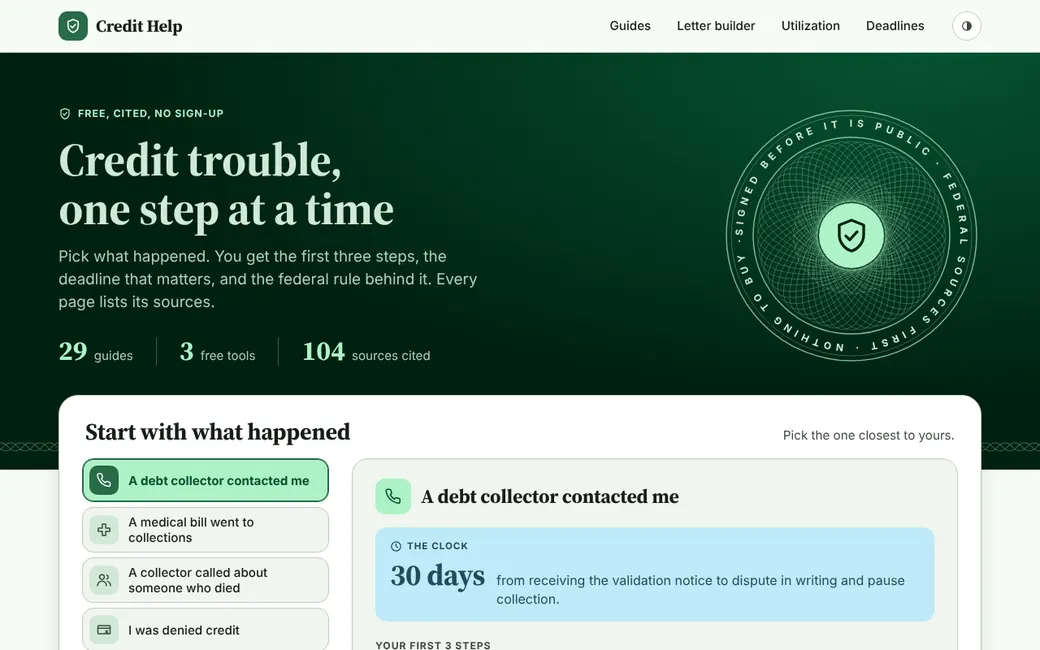
Plain answers for a credit problem you have right now: the first steps, the deadline that matters and the federal rule behind it, plus a free letter builder.
- Pages
- 96
- 93 guides, 3 tools
- Signed by the editor
- 96 / 96
- Latest 2026-11-17
Every guide and tool
Every page the editor has signed, under its own title. A page is listed here once it is signed and public, never as a draft.
Tools 3
Guides 93
- How to make a debt collector prove the debtSigned
- Your rights when a debt collector callsSigned
- Collections on your credit report: how long they stay and what paying changesSigned
- What happens after your car is repossessedSigned
- Car repossession laws by state: what to look up and whereSigned
- What a credit denial letter must tell youSigned
- Identity theft recovery: the first steps, in orderSigned
- How to freeze your credit, and how it differs from a fraud alertSigned
- How to dispute a credit report errorSigned
- The statute of limitations on debt, and what to do if you are suedSigned
- Wage garnishment limits: how much of a paycheck can be takenSigned
- What is a good credit score, and what actually moves itSigned
- Pay for delete: asking a collector to remove a collection when you paySigned
- Medical bills and your credit reportSigned
- Settled a debt for less? The forgiven part may be taxableSigned
- What a charge-off means, and whether you still owe itSigned
- Cosigned a loan? What you owe when the borrower stops payingSigned
- Federal student loans in default: what can happen and the ways outSigned
- A late payment on your credit report: how long it stays and what a goodwill letter isSigned
- Debts after someone dies: who has to paySigned
- Debt collectors on text, email and social media: the rulesSigned
- Hard and soft credit inquiries: which ones count, and what to do about one you do not recognizeSigned
- Denied an apartment because of a screening report: your rightsSigned
- Authorized user on a credit card: what you owe and what shows on your reportSigned
- Credit repair companies: what federal law forbids them to doSigned
- Sued over a debt in small claims court: what to doSigned
- How to freeze a child's creditSigned
- Getting a collection off your credit report: the ways that workSigned
- Where people complain about debt collectorsSigned
- Zombie debt: when a collector revives a very old accountSigned
- Can a debt collector call you at work?Signed
- Can a debt collector contact your family or friends?Signed
- Debt collector threats: arrest, lawsuits, and what is illegalSigned
- The letter that tells a debt collector to stop contacting youSigned
- A debt collector is after the wrong personSigned
- Your debt was sold to a collection agency: what changes and what does notSigned
- Fake debt collectors: telling a scam from a real collectorSigned
- Suing a debt collector: what the law allows, and the one-year clockSigned
- Fees and interest a debt collector adds: what is allowedSigned
- Debt settlement companies: the fee rule, the risks, and the alternativesSigned
- When a payday loan goes to collection: your bank account and your rightsSigned
- Hospital financial assistance: applying, even after the bill went to collectionsSigned
- Reading a debt validation notice, line by lineSigned
- Voluntary repossession: what giving the car back does and does not changeSigned
- Getting your car back after repossession: redeem, reinstate, or neitherSigned
- Your belongings in a repossessed car: how to get them backSigned
- The deficiency balance after a repossession: how it is figured and how to check itSigned
- A repossession on your credit report: how long it stays and what to checkSigned
- Breach of the peace: when a repossession crosses the lineSigned
- Servicemembers and car repossession: the court order ruleSigned
- Turned down for a credit card: what the issuer had to weigh, and what it owes youSigned
- Denied a mortgage: the reasons, the credit scores, and your copy of the appraisalSigned
- Approved, but at a higher rate: the risk-based pricing noticeSigned
- Turned down for a job because of a background check: your rightsSigned
- Insurance and your credit report: when an insurer can use it, and what you are owedSigned
- Denied a checking account: the report behind it, and how to correct itSigned
- Your credit card limit was cut: what the issuer must tell you, and what it cannot chargeSigned
- Fraud alerts explained: initial, extended and active dutySigned
- The identity theft report: what it is, how to get one, and what it unlocksSigned
- Tax identity theft: the IRS letter, the affidavit, and the IP PINSigned
- Medical identity theft: getting your records, correcting them, and clearing the billsSigned
- A credit card was opened in my name: closing it and clearing itSigned
- Debit card fraud: how fast to report, what you can lose, and when you get your money backSigned
- Your information was in a data breach: what to do, by what was exposedSigned
- Lost or stolen wallet: a checklist in the order that limits your lossesSigned
- Your Social Security number was stolen: where it can be used, and how to lock each doorSigned
- Disputing a credit card charge: the 60-day billing error noticeSigned
- Reading your credit report dispute results, and what to ask for nextSigned
- When a credit bureau calls your dispute frivolous: what it means and what to sendSigned
- Adding a statement of dispute to your credit reportSigned
- Disputing directly with the lender or collector that reported the errorSigned
- Someone else's accounts on your credit report: fixing a mixed fileSigned
- A deleted item came back on my credit report: the reinsertion rulesSigned
- Wrong name, address or other personal information on a credit reportSigned
- How to file a complaint with the CFPB, and what happens nextSigned
- Bank account garnishment: what your bank must protect and what it can freezeSigned
- Income protected from garnishment: Social Security, VA benefits, wages and supportSigned
- How to answer a debt lawsuit: the written response, step by stepSigned
- Tax refund offset: why your refund was smaller and how to respondSigned
- Chapter 7 vs. Chapter 13 bankruptcy: how the two differSigned
- Bankruptcy on your credit report: how long it stays and what it should saySigned
- Credit counseling before bankruptcy: the 180-day briefing ruleSigned
- The servicemember 6 percent interest cap: how to claim itSigned
- Secured credit cards: how they work and what to check before you signSigned
- Credit builder loans: you pay first, then get the moneySigned
- No credit history: how a credit record startsSigned
- The minimum payment warning on your credit card statement, explainedSigned
- Credit card rate increase: the 45-day notice and your right to reject itSigned
- Closing a credit card: what changes on your credit reportSigned
- Buy now, pay later and your credit reportSigned
- Credit report vs. credit score: what each one is and which one you can fixSigned
- How to read a credit report, section by sectionSigned
- Credit card grace periods: how to avoid interest on purchasesSigned
Its data
The rows behind its tools, as a page, JSON and CSV, licensed CC BY 4.0. Every dataset
Federal credit deadlines
Every federal clock the Credit Help guides state: how long, for what, and the statute or rule that sets it.
How its pages are made
Credit and court pages wait for the editor's signature. Nothing on this path is indexed unsigned, and the page shows the date it was signed.
- 1A real questionDemand is measured, not guessed: what people search for and what the existing answers miss.
- 2Sources firstThe brief lists the sources a page may cite before a word is drafted. A claim with no source does not get written.
- 3DraftedA language model drafts from those sources. Every page discloses this.
- 4Quality gateA draft that is thin, repeats another page, or states a number without a source is refused.
- 5SignedThe editor checks each claim against its source and signs the page with a date.
- 6IndexedOnly now may a search engine index the page.


